SDG8: DECENT WORK AND ECONOMIC GROWTH
SDG 8: Decent Work and Economic Growth in the UAE
Sustainable Development Goal 8 (SDG 8) aims to promote sustained, inclusive, and sustainable economic growth, full and productive employment, and decent work for all. The UAE has made significant strides in fostering a robust economy while ensuring the protection of workers' rights and promoting decent work conditions.
Ministry of Human Resources and Emiratisation Initiatives
Labor Law Regulations: The UAE's labor laws are designed to protect the rights of workers, ensure fair wages, and promote safe working conditions. The Ministry of Human Resources and Emiratisation (MoHRE) enforces these laws, which include provisions for minimum wage, working hours, and occupational safety.
Workplace Rights Protection: The UAE has established a comprehensive framework to safeguard employee rights. This includes regulations on employment contracts, termination procedures, and mechanisms for dispute resolution. Workers have access to legal channels to address grievances related to unfair treatment or exploitation.
Emiratization Policy: To promote the employment of UAE nationals, the government has implemented the Emiratization policy, which encourages companies to hire Emirati citizens. This initiative aims to enhance the participation of nationals in the workforce and promote sustainable economic growth.
Skill Development and Training Programs: The government invests in vocational training and skill development programs to enhance the employability of both nationals and expatriates. These programs align with market needs and aim to create a highly skilled workforce.
Labor Market Regulations: MoHRE regularly reviews and updates labor market policies to ensure that they meet the changing needs of the economy. This includes addressing issues related to job quality, youth employment, and gender equality in the workplace.
SDG 8 at Al Ain University
Al Ain University (AAU) is committed to promoting SDG 8 through various educational and community initiatives focused on decent work and economic growth:
Career Development Programs: AAU offers a range of career services, including job placement assistance, internships, and career counseling. These services help students transition smoothly from education to employment, ensuring they are well-prepared for the workforce.
Skill Enhancement and Training: The university provides workshops and training sessions aimed at enhancing students' employability skills, such as communication, leadership, and critical thinking. These initiatives prepare students for the demands of the job market.
Research on Labor Market Issues: Faculty and students engage in research related to labor market trends, employment policies, and economic development. This research contributes to a better understanding of the challenges and opportunities within the UAE’s labor market.
Community Engagement: AAU collaborates with local businesses and organizations to promote job creation and economic growth in the region. These partnerships often include joint initiatives to support entrepreneurship and innovation.
Inclusive Employment Practices: The university promotes diversity and inclusion in its workforce and academic programs. By fostering an inclusive environment, AAU contributes to the overall goal of decent work for all individuals, regardless of their background.
Conclusion
The UAE's commitment to SDG 8 is evident in its robust labor laws and initiatives aimed at promoting decent work and economic growth. The Ministry of Human Resources and Emiratisation plays a crucial role in protecting employee rights and fostering a dynamic labor market. Al Ain University supports these efforts by providing education, training, and community engagement initiatives that prepare students for successful careers while promoting inclusive and sustainable economic growth.
Human Resource Department
Vision
To serve AAU by providing, retaining and developing qualified, diverse & highly motivated staff.
Mission
The mission of the Human Resources Unit is to develop, practice and facilitate the processes which create an environment where the entire staff can make a vital contribution to achieve the AAU’s mission.
Goals and Objectives
In Alignment with AAU Goals, following are HR Unit’s Goals and Objectives.
- To make AAU an “Employer of Choice” through continuous image improvement by providing best HR services.
- To cultivate the culture of trust and welfare, where employees are fully engaged as efficient individuals to AAU and social community.
- To motivate existing staff by inspiring long-term commitment, career development in order to achieve and sustain higher retention rate.
- To ensure the compliance of HR policies with (MOHRE) employment laws in order to make AAU a workplace that has all the necessary support for productive relationships.
Duties and Responsibilities
The Human Resources Unit at AAU renders a wide range of services. The key services are mentioned below:
- Job identification, advertisement, screening selection and recruitment.
- Job evaluation and grading.
- Issuance of employment visas, contracts, and associated paper work.
- Employee Relations Management.
- Provision of advisory service on employment legislation/terms and condition of service.
- Management of pre and post-arrival arrangements for new staff orientation and on boarding etc.
- Designing Training and development programs according to the requirements of the organization and Units.
- Management of compensation and benefits.
- Overseeing Time and Leave management.
- Performance management and Career Development.
- Development and review of HR policies and procedures.
- Budgeting and Periodic Reporting.
- Provision of support on conflict management i.e. disciplinary and grievance advice.
- Employees Separation management
Finance Unit
Vision
We aspire to be the leading example in providing financial services and logistics in higher education in the UAE for other institutions to follow.
Mission
Our role is to ensure that AAU benefits from the highest standard of financial, administrative, and resource management. To that end, the Finance Unit is committed to utilizing our expertise to deliver advanced services that offer excellent value to the faculty, staff, and students and ensure an environment which demonstrates respect and encourages the success of each individual in our institution.
Goals and Objectives
The main goals of the Finance Unit are:
- Promote financial responsibility.
- Provide quality services.
- Support the teaching, research, and community service goals of AAU.
- Maintain safe, clean, and accessible facilities.
- Provide quality auxiliary services.
- Promote and maintain the fiscal health of AAU through rational budgets, financial reports, and purchasing policies.
- Maximize the satisfaction of faculty, staff, and students.
Duties and Responsibility
The main responsibilities of the Finance Unit are:
- coordinating the annual budget for AAU;
- implementing aspects of sound financial management;
- processing Annual, Mid-year, and Quarterly reports;
- perform auditing tasks;
- handling student payments and tuition fees;
- contributing to managing the financial aid fund;
- coordinating the purchasing and procurement policies;
- and, carrying out day-to-day financial matters.
Full time & Part Time Faculty Members
Full-time Faculty Members
The full-time faculty ranks are: an instructor, assistant professor, associate professor, and professor. Appointment to any rank is made according to regulations for recruitment. A faculty contract may be renewed, on the basis of a rolling contract.
Visiting Faculty Member
A visiting faculty member may be a distinguished faculty member who is on leave from another college or university, or from a comparable educational or research institution. Appointment to this rank is either on a semester-by-semester basis or on an annual basis. A visiting faculty member can be a visiting professor, a visiting associate professor, or a visiting assistant professor. The same qualifications and procedures shall apply for visiting faculty members as per the initial requirements for full-time faculty ranks. Recommendations for the reappointment of a visiting faculty member shall be made by the relevant college Dean to the University President. A visiting faculty appointment may not be renewed for more than two consecutive years. A visiting faculty member is entitled to specific resources and access to specific facilities at the university as determined by the Dean of the college to which s/he has been appointed.
Part Time Faculty Member
Below is a list of the policies and procedures that have been adopted by AAU for part-time faculty members:
- A part-time faculty member is one whose major employment is not with AAU and whose teaching load is 6 hours or less per semester.
- Part-time faculty members are entitled to the professional privileges and compensation accorded to full-time members.
- Part time faculty appointments are subject to the university regulations with respect to recruitment of full-time faculty members.
- The qualifications of a part-time faculty member are subject to the same criteria as a full-time faculty member.
- Recommendation for a part-time faculty position shall be made by the Department Head or College Dean and is approved by the University President.
- The contract duration for this position is for one semester.
- The ratio of part-time faculty members in each academic program should not exceed 25% of the total faculty members.
Collective Bargaining Rights of Employees in the UAE
This article was written by partner Jane Clayton and trainee solicitor Emily Colville.
The hosting of the 2022 football World Cup in Qatarhas led to considerable media and political attention on the rights of employees in that country and the surrounding region [Qatar’s World Cup ‘slaves’]. Here we focus on the position in one neighbouring country, the UAE, and in particular on employees’ rights to take collective action.
UAE Federal Law No. 8 of 1980, as amended, (the Labour Law) is the principal piece of legislation governing the relationship between employers and employees [U.A.E. Labour Law, Federal Law No. (8) of 1980 – Labour Law and its amendments]. Its provisions apply to both UAE nationals and migrant employees. The Labour Law clearly outlines employee rights and covers all aspects one would expect in such a law, including hours of work, annual leave, termination rights, sanctions and the handling of disputes.
Specifically highlighted in the Labour Law (under Article 112) is the criminal nature of strikes. In the past, workers have been temporarily suspended from work without pay, as permitted by the Labour Law, or even deported for taking strike action. In 2011, 71 Bangladeshi construction workers were arrested by police and deported for instigating a week-long strike of around 5000 workers at the Arabtec construction company [UAE deports 71 Bangladeshi workers]
Further, the Labour Law does not recognise the right of workers to organise and form trade unions. However, whilst such unions are not permitted, disputes between employer and employee can be referred to the Ministry of Labour and Social Affairs which endeavours to resolve matters by taking on the role of adjudicator. Our experience has been that the Ministry does protect workers’ right which are enshrined in the Labour Law.
UAE ministers have always denied any accusations of poor treatment of (mainly foreign) labourers [UAE plans to form labour unions, legalise collective bargaining] and in 2006, the UAE labour minister Ali al-Kaabi announced that a new law was being drafted to allow labourers to form unions [UAE to allow construction unions]. However, the formation of labour unions still remains illegal. According to news agency Al Jazeera, supporters of Dubai’s economic model believe that a lack of collective bargaining rights is good for workers, as it leads to more growth and job creation. Supporters say that “part of the reason why countries such as France are in the economic doldrums…is because the labour market is overly regulated and employees spend more time protesting than actually working” [Striking Dubai workers face mass deportation].
Last year, a two-day strike by thousands of construction workers over pay concluded with most of those involved returning to work and, as no damage to property was caused during the strike, no salary deductions were made made[1]. The Ministry of Labour sent a team to discuss the dispute with both the workers and representatives of the employer; there was some police involvement too. This seems to indicate a change in the way matters are being handled since the aforementioned 2011 strike where a somewhat harder line was taken.
The Dubai International Financial Centre (DIFC) is a freezone in Dubai. It is unique amongst UAE freezones in that it has is its own legal system and laws, including labour laws [Employment Law, DIFC Law No. 4 of 2005]. There is no equivalent ban on striking under the DIFC’s laws. Arguably though, such a ban might be considered unnecessary since employees of companies operating within the DIFC tend to be well remunerated and in receipt of favourable employment packages.
The UAE and other Gulf countries continue to be the subject of criticism from human rights groups in respect of their labour laws which they argue fail to adequately protect employees [Human Rights Watch, World Report 2013, United Arab Emirates]. Any development of employee rights in these areas is likely to continue to be of interest to those doing business in the UAE.
AAU Faculty Recruitment and Appointment
The main concern of the staff involved in the recruitment process at AAU is the selection of the most qualified candidates in their respective areas of specialization. An excellent academic record, research potential, and effective teaching performance are important criteria for the selection of faculty members.
The faculty recruitment procedure begins with an initiative taken by the Dean which includes a description of the position, duties, and responsibilities that the faculty position entails, and a justification for the vacant position. The candidate is asked to submit an application form, and other required documents, to the Human Resources Unit. All applications are sent to the academic department concerned for evaluation.
AAU has a non-discriminatory recruitment policy with respect to an applicant’s gender, race, religion, or physical disabilities. Selection criteria include the following:
- academic performance, and the academic reputation of the institution that granted the degree held by the candidate;
- proficiency in the field to be taught and the ability to integrate knowledge to related subject areas;
- experience in teaching and the application of knowledge in the particular field of specialization;
- work published and lecturing experience;
- knowledge and understanding of the philosophy, goals, and objectives of AAU
The Third Regional Faculty Development Workshop
ORGANISED BY

American Association of Colleges of Pharmacy
(AACP)

Al Ain University
(AAU)

Accreditation Council for Pharmacy Education
(ACPE)
SPEAKERS

Craig D. Cox, Pharm.D., FCCP, BCPS
Associate Professor of Pharmacy Practice & Vice Chair of Experiential Programs, Texas Tech University Health Sciences Center School of Pharmacy, Lubbock, TX.
Read Full Biography
Susan S. Vos, PharmD, FAPhA
Clinical Associate Professor & Director of the Professional Experience Program, The University of Iowa College of Pharmacy, Iowa City, Iowa USA
Read Full Biography

ABOUT THE WORKSHOP
This program is designed to help teams of 3 to 5 pharmacy faculty members and administrators from a university work together to evaluate their experiential education program. Expert faculty will lead discussions and activities to assist you in developing and evaluating your experiential education program. Sessions will focus on the importance, assessment and best practice of experiential education. In addition, participants will be invited to present posters to allow faculty members in the region to present their experiences with experiential education.
OBJECTIVES
At the conclusion of the workshop, participants (teams/individuals) shall be able to:
- Explain the importance of experiential education and its alignment with other curricular requirements.
- Design the structure of the introductory and advanced experiential education experiences
- Identify how to optimally prepare students, preceptors, and internship sites for experiential education
- Create an effective evaluation and assessment policy for your experiential education program
ELC Faculty Attend TOEFL iBT Workshop
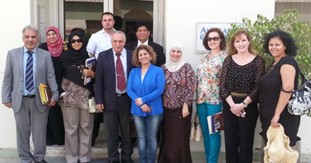
ELC Faculty Attend TOEFL iBT WorkshopThe faculty members at the AAU English Language Center from both campuses, Al Ain and Abu Dhabi, attended the Propell TOEFL iBT workshop organized by English Testing Services (ETS), the owner and regulating body of TOEFL. The workshop, held at AMIDEAST offices in Abu Dhabi, revolved mainly around TOEFL iBT preparation.
Ms. May Jabri, AMIDEAST Portfolio Development Manager/Trainer, delivered the workshop which included an overview of the TOEFL development, a detailed explanation of how questions are written, and the methods of rating answers in addition to highlighting the key factors to consider when preparing students for the exam.
Ms. Lima Ghazi Sabri, Director of the AAU English Language Center, underlined that the importance of the workshop lies in the details presented on the development of the exam itself and the practical ideas suggested to help instructors prepare students. Further, the training material comprised valuable resources that will be of great assistance to instructors when developing teaching material for their classes in order to maximize the benefit the students will get.
On their part, the attendees lauded the top level training delivered by the trainer, Ms. Jabri, and expressed their appreciation of AAU, AMIDEAST, and ETS for organizing this workshop hoping for more specialized workshops of the same level in the future. The participants were awarded certificates from ETS at the end of the workshop.
It is noteworthy that the English Language Center at Al Ain University campuses, in Al Ain and Abu Dhabi, offers different levels of English language courses for AAU students from various specializations to prepare and help them in obtaining the required scores in various English language proficiency tests: TOEFL ITP, TOEFL iBT, and IELTS. AAU is also a testing center for TOEFL ITP.
AAU President Greets Faculty Members
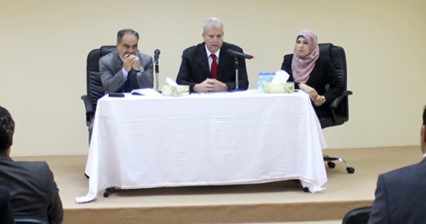
Prof. Ghaleb Awad El Refae, AAU President Greets Faculty MembersAs part of the attention he gives to communicating with faculty members and providing students with updated services, Prof. Ghaleb Awad El Refae, AAU President, met with the faculty members at several colleges, received them and extended his greetings for the start of the academic year 2014/2015.
During the meeting, Prof. El Refae pinpointed AAU’s directions towards development and quality, and he reiterated that the principles adopted by AAU are in tandem with the standards of the Commission on Academic Accreditation of the UAE Ministry of Higher Education and Scientific Research. El Refae added that AAU’s development and quality are based on eleven criteria (Organization and Governance, Quality Assurance, Academic Programs, Academic and Administrative Staff, Students, Learning Resources, Physical Resources, Fiscal Resources, Transparency and Integrity, Research and Scholarly Activities, and Community Engagement). He also stressed the importance of scientific research to meet the needs of the UAE community as well as its economic and educational reality.
Further, El Refae highlighted that mutual respect and openness should always govern the relationship between students, faculty, and administration. Faculty members were also urged to abide by office hours and textbooks and to continue to improve the educational process which is a pivotal criterion in quality assurance. Thus, AAU will be capable to attain the future vision it aspires to according to the set strategic plan.
Al Ain University and the "Sandooq Al Watan" collaborate to empower youth
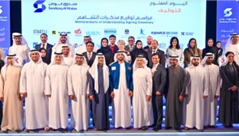
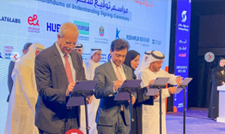
In the presence of His Excellency Sheikh Nahyan bin Mubarak Al Nahyan, Minister of Tolerance and Coexistence and Chairman of the Sandooq Al Watan, as part of the "Open Day for Employment" organized by the Sandooq Al Watan at Manarat Al Saadiyat in Abu Dhabi, to empower youth in the private sector and enhance their capabilities to enter the entrepreneurship field, Al Ain University (AAU) has signed a cooperation agreement with Sandooq Al Watan to launch the National Network for Business Incubators, which was also signed by a group of business incubators in the country, in the presence of several ministers, prominent businessmen, Emirati investors, leaders of over 30 business incubators and accelerators nationwide, and more than 500 Emirati youth seeking job opportunities in the private sector alongside the Fund's partners, board members, and His Excellency Yasser Al Qarqawi, the Director General of the National Fund. In addition to the agreement signing, the events featured an exhibition showcasing the Fund's notable works and successful experiences of Emirati youth.
Prof. Ghalab Al Refae, AAU President, stated that the collaboration between Al Ain University and Sandooq Al Watan is a long-term partnership that emphasizes both parties' keenness to empower the nation's youth, enhance their efforts, skills, and create extensive job opportunities in the private sector to enable young men and women to utilize their potentials and invest in themselves. This demonstrates our commitment to contributing to driving the wheel of development and prosperity in the country.